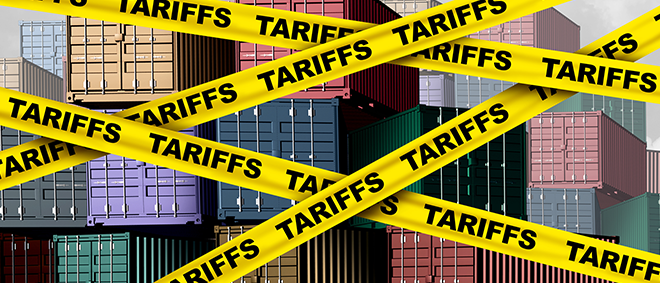
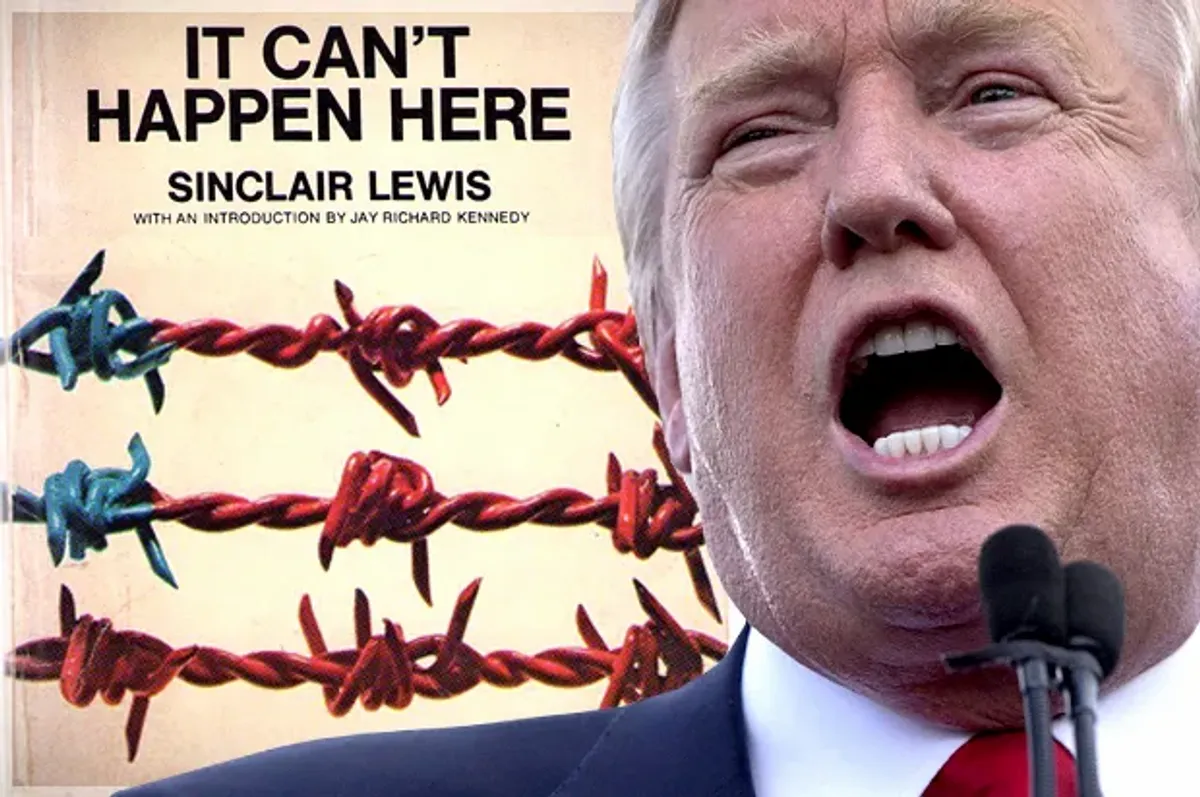
I didn’t plan to spend the week writing about geopolitics. But it’s hard to ignore a moment when the President of the United States publicly ties foreign-policy decisions to not receiving the Nobel Peace Prize — then threatens tariffs on allied countries unless they support his attempt to annex Greenland. That’s not diplomacy. That’s coercion dressed up as grievance.
And it lands just days after a U.S. military operation in Venezuela led to the capture of Nicolás Maduro, reigniting an old U.S. habit: using regional instability as a justification for intervention while claiming the moral high ground. The pattern becomes impossible to dismiss. This isn’t a series of disconnected events — these are predictable moves in a long, worsening trajectory.
People love to talk about the GOP as “the party of Lincoln,” but that phrase now reads like a historical technicality, not a living identity. The Republican Party that exists today — particularly under Trump — bears almost no resemblance to the coalition that fought a war against secession and built an agenda around federal power, industrial development, and civic reconstruction. The drift didn’t happen overnight. It wasn’t even subtle. It unfolded in stages, each one chipping away at the party’s former ideology and replacing it with a structure optimized for resentment, hierarchy, and dominance.
The modern version isn’t “reactive;” it’s fascist — not in the lazy, internet-argument sense, but in the historical sense. It prioritizes power over principle, demands loyalty over legitimacy, treats institutions as obstacles rather than guardrails, and uses grievance as both organizing narrative and justification for escalation.
And that escalation is now happening on the world stage.
Short-Term Gains, Long-Term Erosion: The American Pattern
If you step back far enough, Trump’s improvised foreign policy is not an aberration. It’s the logical endpoint of a historical pattern: American leaders prioritizing short-term strategic “wins” that eventually become long-term liabilities. We’ve done this repeatedly across our history:
Reconstruction (1865–1877):
The federal government abandoned Black civil rights to “restore unity,” allowing white supremacist terror to replace federal law. The short-term political compromise created a century of disenfranchisement, violence, and instability.
The Gilded Age and Robber Barons:
Rapid industrialization was prioritized over worker safety, antitrust enforcement, or financial stability. The payoff was immediate wealth concentration — and the long-term result was mass labor unrest, violent strikes, and eventual collapse into the Great Depression.
Cold War Interventions (1950s–1980s):
The U.S. repeatedly toppled governments for short-term ideological advantages — Iran, Guatemala, Congo, Chile. Those “wins” produced decades of instability, radicalization, anti-American sentiment, and blowback that reshaped global politics.
The Iraq War (2003):
A short-term political victory based on faulty intelligence created a destabilized region, empowered Iran, and set the stage for ISIS. The consequences are still unfolding.
In all these cases, leaders made decisions that served immediate domestic political needs — unity, industry, anti-communism, post-9/11 dominance — while fundamentally destabilizing the systems they claimed to protect.
Trump is not breaking from U.S. tradition; he is accelerating the existing pathology.
Why the Current Moment Is Different — and More Dangerous
What makes the Venezuela intervention and the Greenland-tariff threats so alarming isn’t that they happened. It’s the underlying logic driving them.
Historically, U.S. foreign policy at least pretended to rest on strategic goals, even when those goals were morally indefensible. But Trump’s actions are not rooted in strategy; they’re rooted in personal grievance and authoritarian instinct.
This shift matters.
- When foreign policy is driven by resource interests, it’s imperialist.
- When foreign policy is driven by ideology, it’s interventionist.
- When foreign policy is driven by personal moods and emotional slights, it’s unstable.
- When foreign policy is used to punish disloyal allies, it’s authoritarian.
Trump explicitly frames foreign policy as a loyalty test. Greenland is not about geography or natural resources (though those matter). It’s about demonstrating that allies must bend, not collaborate. NATO becomes less a mutual defense pact and more a feudal hierarchy with Washington as the lord demanding tribute.
That’s not strategic decline — that’s reputational collapse.
Late-Stage Capitalism and the Infrastructure of Decline
Here’s where the tech angle matters.
People keep saying AI is “non-physical” or “just software.” That’s a convenient fiction. Every large language model is built atop:
- enormous water consumption
- massive energy footprints
- rare-earth mining
- data-center sprawl
- exploitative global labor pipelines (labeling, moderation, synthetic training inputs)
It’s not “information floating in the cloud.” It’s medieval extraction economics with a futuristic aesthetic.
Much of the American industry’s push to “AI all the things” is a perfect microcosm of late-stage capitalism:
- Maximize revenue this quarter
- Externalize long-term costs
- Disrupt established systems without replacing them with anything stable
- Burn resources assuming someone else will deal with the fallout
It’s the same thinking that created ghost cities in China, strip-mined Appalachia, and justified suburban sprawl as a permanent solution. The same logic that ended Reconstruction early. The same logic that toppled governments during the Cold War. The same logic that fueled the 2008 financial collapse.
Short-term triumph. Long-term rot.
And now that mindset has merged with a political party openly flirting with post-democratic governance. The result is a world where domestic institutional decay and reckless foreign policy are not separate problems — they’re symptoms of the same disease.
The United States Is Losing Its Operating System
The U.S. was never perfect — far from it — but it used to operate within a set of norms, alliances, and shared stories that lent it stability and predictability. Those norms acted like an operating system: invisible when working, disastrous when corrupted.
Now we’re witnessing:
- alliances destabilized for personal vendettas
- trade policy used as a weapon against allies
- military intervention justified by spectacle rather than strategy
- international agreements discarded without replacement
- domestic institutions treated as obstacles rather than infrastructure
The result is a country that appears increasingly unreliable, impulsive, and willing to abandon global leadership in exchange for fleeting domestic points. That erosion of credibility is far more dangerous than any individual policy decision.
Because once a nation is no longer predictable, allies retreat, rivals advance, and the global system tilts toward instability.
Where This Leads
If history is any indication, short-termism always ends the same way:
- weakened internal institutions
- loss of international trust
- economic volatility
- empowered authoritarian actors
- systems primed for collapse
The irony is that every short-term “victory” makes the long-term outcome worse. Trump’s threats against NATO allies may produce temporary political theater, but they accelerate the U.S. decline from a stabilizing power to a destabilizing one.
And once the world stops treating the U.S. as a reliable partner, it doesn’t take much for the entire post-WWII order to wobble.
This isn’t about one man.
It’s about a governing philosophy that cannot conceive of the future and therefore keeps setting it on fire.